
Principles and objectives
With its contributions, Switzerland is helping to strengthen cohesion within Europe and improve how migration flows are handled. The EU and its member states are Switzerland's most important partners in economic and political terms. The positive economic and social development of the EU member states therefore also benefits Switzerland.
Switzerland is in the middle of Europe. Due to this geographical and cultural proximity, but especially because of their political and economic weight, the EU and its 27 member states are Switzerland's most important partners. Switzerland depends on a stable and economically prosperous European environment in order to safeguard its prosperity and security in the long term. Switzerland benefits from positive economic developments in the EU-15 member states. New partnerships and opportunities for cooperation are created, and the exchange of knowledge and experience is also consolidated.
Particularly in today's unstable geopolitical climate, Switzerland's second contribution is sending out a signal of its solidarity as well as its commitment to peace, security and stability in Europe. It is helping to create new prospects for people in its partner countries and strengthen their democratic structures. The second Swiss contribution is also a key part of Switzerland's European policy.
Consolidating relations with the EU and its member states
The Swiss contribution bolsters Switzerland's bilateral relations with the partner countries and the EU. The Swiss contribution is part of Switzerland's Europe policy and strengthens Switzerland's reputation abroad.
Strengthen partnerships
Thanks to the Swiss contribution, new partnerships are emerging between institutions in the partner countries and Switzerland. These partnerships are invaluable to Switzerland's integration in European networks. Cooperation promotes the exchange of knowledge and experience and raises Switzerland's profile in Europe.
Taking on cross-border challenges
Economic rifts and youth unemployment in Europe have worsened since 2008, when the financial and economic crisis set them in motion. The rise in unevenly distributed migration flows from 2015 have posed major challenges to many EU member states. These developments also entail risks for Switzerland. With its focus on vocational education and training and migration, the second Swiss contribution helps to overcome these challenges and to harness the potential of migration.
Drawing on opportunities for the Swiss economy
Switzerland has access to the EU single market via the bilateral agreements with the EU, so it benefits from economic and social development in the partner countries of the Swiss contribution. The rapid growth of their purchasing power makes them attractive markets for Swiss companies.
The projects and programmes in the partner countries of the second Swiss contribution further the following five objectives:
Promoting economic growth and social partnership and reducing unemployment
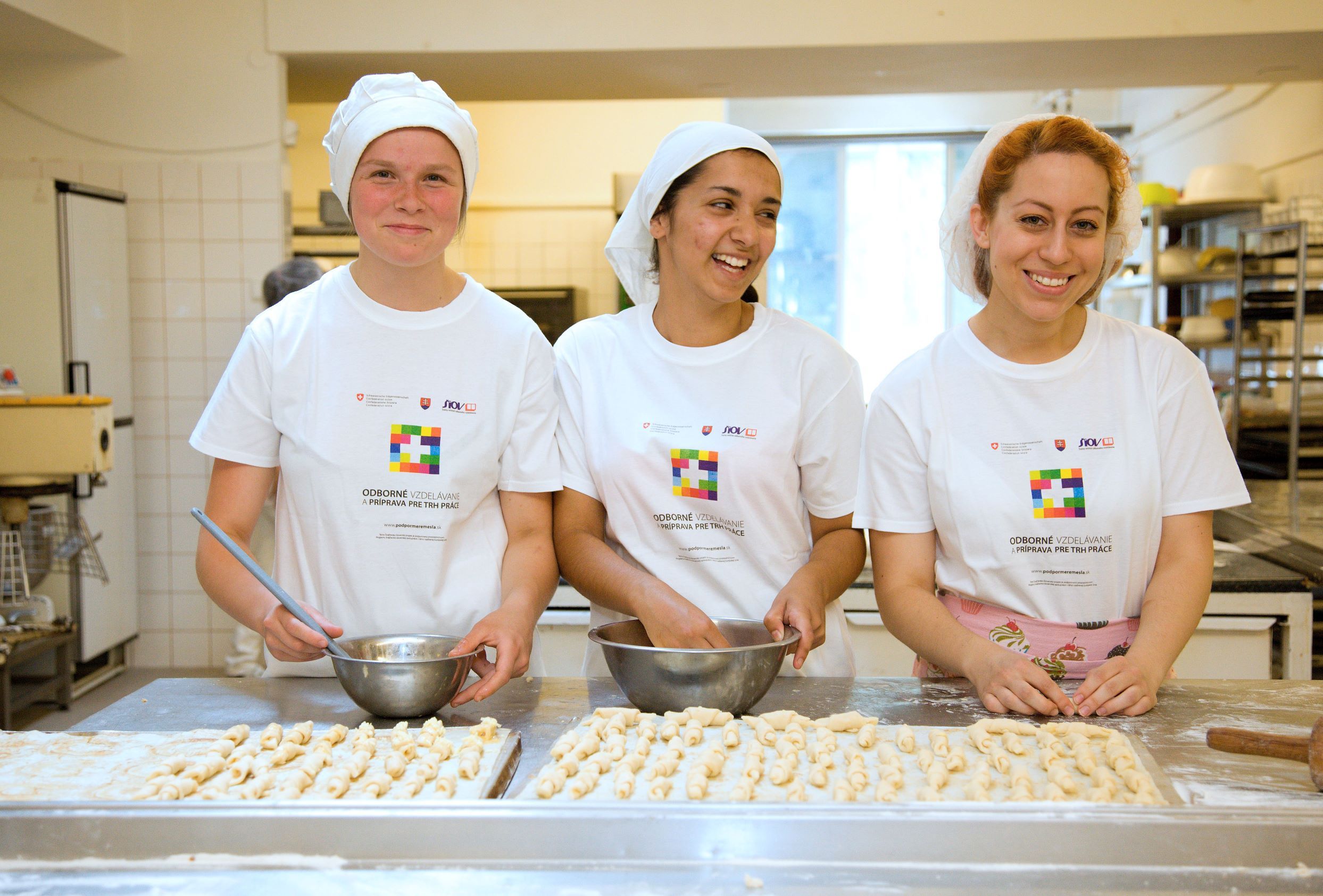
The focus here is on promoting vocational education and training, research and innovation, as well as access to financing for SMEs. These projects are also in Switzerland's interest, as the Swiss export industry benefits from the development of the Eastern European growth markets and the increasing purchasing power in the partner countries.
Dealing with migration, promoting integration, and improving public safety
The focus here is on experience-sharing as a means of overcoming the challenges arising in the context of refugees and migration. Human trafficking and organised crime are international problems, and Switzerland also has an interest in solving them.
Protecting the environment and climate
Switzerland supports measures that promote infrastructure projects, public transport, drinking water supply, wastewater treatment, energy-efficient construction, the use of renewable energies, waste disposal and nature conservation. Switzerland too benefits from reduced environmental pollution.
Strengthening social security and healthcare systems
Switzerland supports measures towards strengthening the public healthcare system and health and social services for the elderly, children and minorities. Equal opportunities and social inclusion ease social tensions, which ultimately also benefits Switzerland. The projects in the healthcare sector also open up opportunities for the Swiss medtech sector.
Promoting civic engagement and transparency
Supporting civic engagement empowers citizens to influence democratic processes. It also improves access to social services. In this area, exchanging experiences with Swiss organisations is particularly valuable.
Thematic breakdown of the Swiss contribution
The Swiss Agency for Development and Cooperation (SDC) and the State Secretariat for Economic Affairs (SECO) are jointly responsible for implementing the cohesion projects. The vocational education and training projects' implementation is carried out in cooperation with the State Secretariat for Education, Research and Innovation (SERI). The State Secretariat for Migration (SEM) is responsible for implementing the migration projects.
Switzerland's administrative expenditure over ten years is estimated at five per cent of the total amount of the Swiss contribution (CHF 1.302 billion). An additional CHF 22 million is available for organisations outside the federal government that contribute their Swiss expertise to the projects. This is intended to strengthen bilateral relations with the partner countries, provide expertise and ensure that the projects and programmes are sustainable and meet quality standards.
Contact
Swiss Contribution to EU Member States / Cohesion Section
Holzikofenweg 36
3003 Bern