
Urban development: Concrete solutions to complex problems
How can cities strengthen social cohesion and shape integration in practical terms? As part of the Swiss-Polish City Programme, representatives from 19 Polish cities visited Switzerland. They gained insights into local projects – ranging from neighbourhood work to vocational training – and discussed solutions to challenges such as migration, demographic change and limited resources.
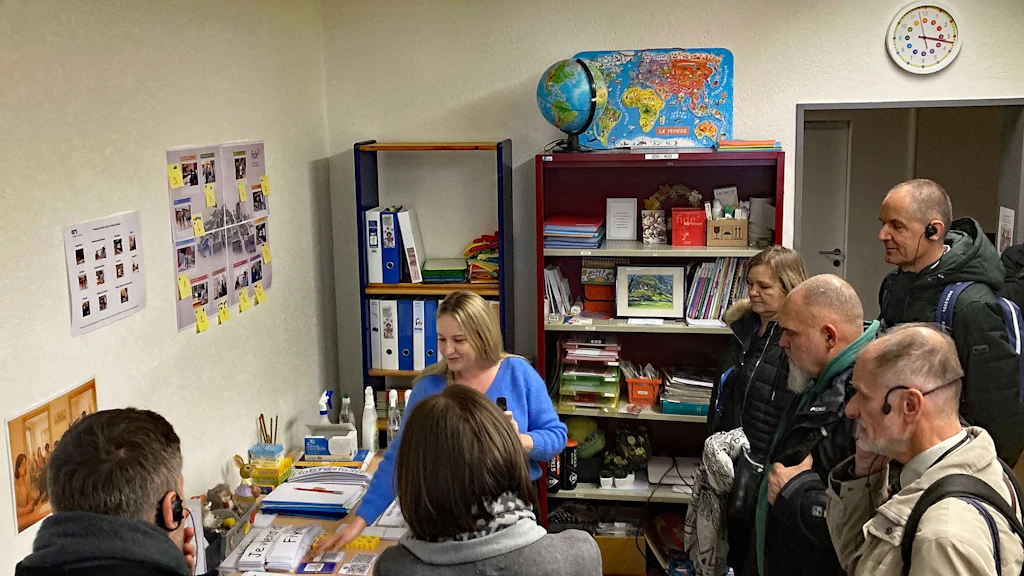
What can Polish mayors learn when they visit Freiburg to find out about neighbourhood festivals, youth clubs, community gardens or integration measures?
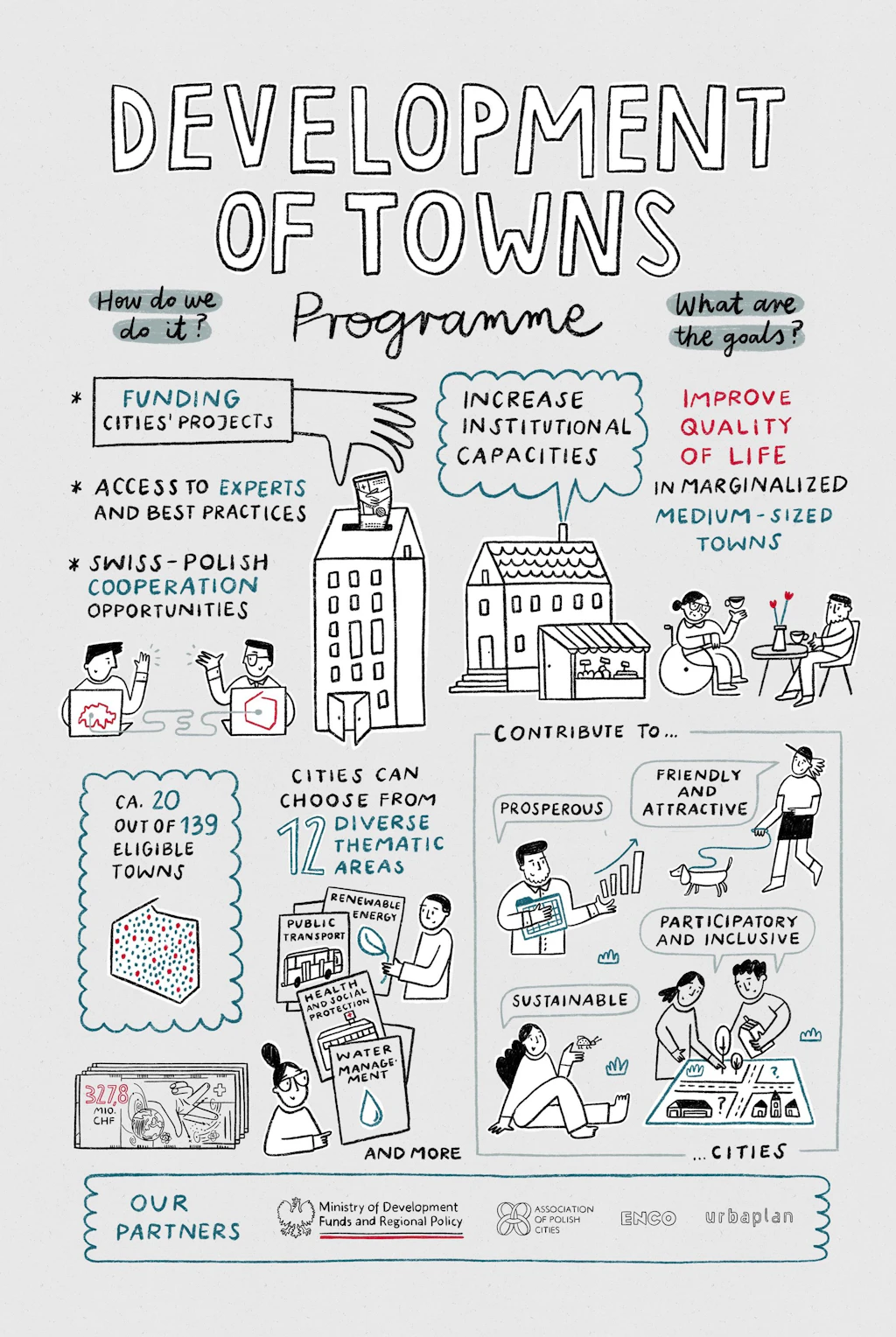
These and other questions relating to urban development, environmental protection and the dual education system were the focus of two delegation visits organised by the Swiss-Polish Cities Programme. In collaboration with the Polish Ministry of Funds and Regional Policy and the Association of Polish Cities, 19 cities and their project proposals were selected from 119 applications. Representatives from these cities visited Switzerland to gather inspiration for their local authorities and future projects.
Swiss expertise and a partnership-based approach
“Small and medium-sized towns in particular struggle with the complex funding structure in Brussels. What makes the cooperation with Switzerland unique is its needs-based programme approach, which combines project funding, technical assistance and the exchange of experience,” explains Tomasz Potkański from the Association of Polish Cities.
In total, the State Secretariat for Economic Affairs (SECO) and the SDC are providing CHF 278.7 million for the city programme by the end of 2029. The funds come from Switzerland’s second contribution to selected EU member states and cover 85% of the total costs. Poland is contributing 15% of the funding. This shared responsibility strengthens the implementation of projects on the ground – particularly in small and medium-sized towns, where social cohesion is crumbling and the challenges of living together are increasing: young people are moving away, and older people are losing touch. A lack of healthcare infrastructure and leisure facilities for young and old are merely the symptoms of a profound structural change, which the programme aims to shape through cooperation and Swiss expertise.
Better planning leads to social cohesion
The EU’s latest regional policy study found that regions and cities play a key role in strengthening social cohesion. Through inclusive urban planning, education, social services and community-based initiatives, they can help to reduce exclusion and tackle the root causes of insecurity. This social dimension is crucial for countering polarisation and strengthening social trust, particularly in vulnerable or highly vulnerable areas. Through the European Regional Development Fund (ERDF) alone, the EU is allocating EUR 200 billion to sustainable development for the period 2021–2027, with a focus on innovation and social cohesion, amongst other things.
Alongside large, existing EU funding mechanisms, the question arises as to what distinguishes Swiss programme funding. “With Switzerland you can work in niche areas and thus achieve greater impact. But to know how to tackle a complex problem like integration, we need Switzerland’s experience,” explains Potkański. Strengthening social cohesion and integration are key challenges for which the 19 selected cities are also seeking innovative solutions.
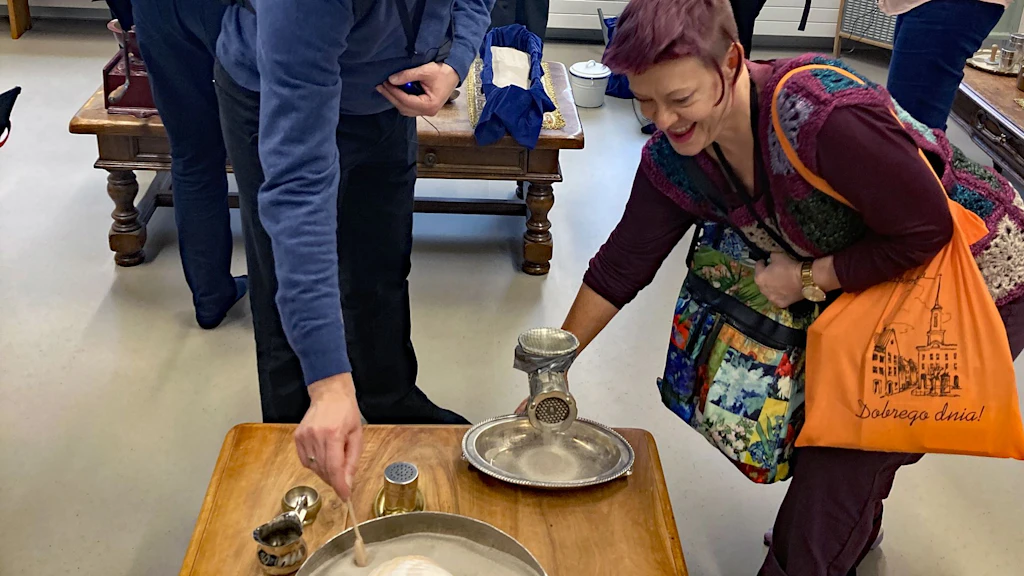
In Fribourg, participants learned first-hand how varied approaches to strengthening social cohesion in Switzerland can be: from integration programmes for people with a migrant background, through the promotion of activities for children and young people, to schemes for older people or neighbourhood-specific projects. Concrete examples include neighbourhood festivals, welcome events for new residents, and community gardens. “Ultimately, it is about breaking down barriers and promoting mutual acceptance,” said Ula Stotzer, Cohesion Officer for the City of Fribourg. Language learning and childcare are also challenges in Switzerland, which were discussed with the Polish guests at the Caserna la Poya in Fribourg.
Added value through exchange and ‘Swissness’
The knowledge that Switzerland shares with Poland is one of the key mechanisms of Swiss programmes in EU member states: the added value lies in ‘Swissness’. For example, Swiss partner organisations such as the ENCO-urbaplan consortium work directly with their Polish counterparts. Or there are Swiss systems such as dual education or integration approaches that are internationally recognised. For instance, the Organisation for Economic Co-operation and Development (OECD) recently noted in a study on the state of integration of immigrants that Switzerland is particularly successful in integrating immigrants into the labour market.
Potkański emphasises: “We must work systematically and create flexible teams to tackle complex problems in local communities. This also involves investing in our own training and making better use of local resources such as neighbourhoods and businesses.”
Contact
EU Member States Division
Eichenweg 5
3003 Bern